
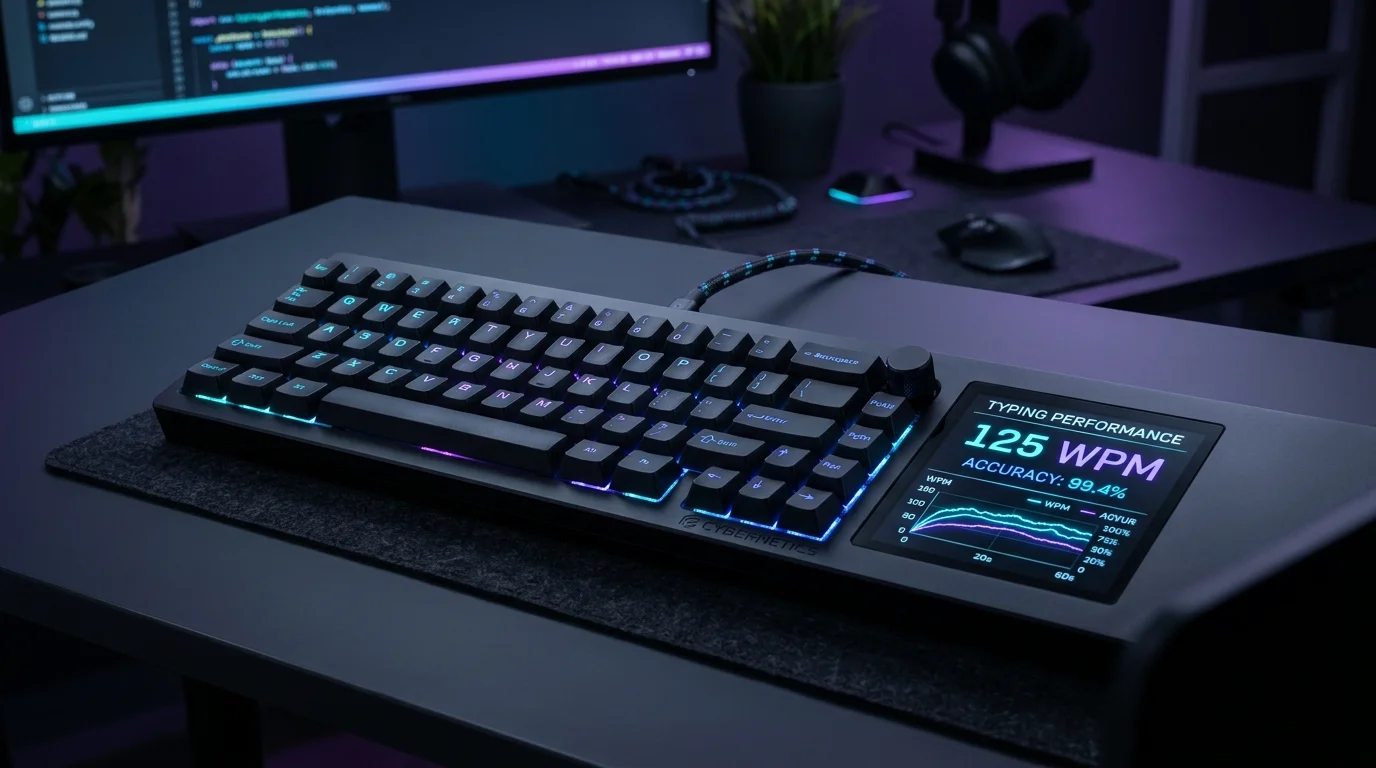
Measure net words per minute, characters per minute, keystroke cadence, and raw finger accuracy with calibrated live text streams.
1 Minute and 60-Second Typing Speed Test: The Global Benchmark
The 1-minute typing test is the universal standard used by recruiters, school curriculums, and competitive typists worldwide. Sixty seconds provides an ideal measurement of burst velocity without the confounding variable of finger fatigue. In modern digital workflows, most communication occurs in short bursts, such as drafting emails, writing code, or answering live chat tickets.
Our interactive typing test engine calibrates keystrokes in real time. Select your preferred test duration above (30 seconds, 1 minute, 3 minutes, or 5 minutes) and start typing the active word stream. Read our deep-dive research in our companion article on the 1 Minute Typing Test Benchmark.
How to Check Your Typing Speed WPM Accurately (Gross vs Net Formulas)
Understanding your typing score requires examining the mathematical algorithms that govern words per minute. Standardized typing certifications define one word as exactly five keystrokes, including letters, spaces, and punctuation marks. This standard normalization ensures that typing technical terms is scored fairly against simple vocabulary.
Professional exams calculate your operational output using two primary metrics:
- Gross Words Per Minute (GWPM): Measures your absolute raw keystroke speed without factoring in errors:
Gross WPM = (Total Keystrokes / 5) / Time in Minutes. - Net Words Per Minute (NWPM): Measures true productive speed by subtracting uncorrected typos:
Net WPM = Gross WPM - (Uncorrected Errors / Time in Minutes).
On a 1-minute test, every uncorrected typo deducts one full word from your certified score. Compare your score against national averages in our study on Average Typing Speed WPM by Age and Profession.
Typing Speed Test for Beginners: How to Break the 40 WPM Ceiling
If your current typing speed sits below 40 WPM, you are likely relying on sight typing (the hunt-and-peck method). Looking down at your hands creates visual latency that caps your speed. To transition to professional typing tiers, follow these core principles:
- Anchor to the Home Row: Rest your left fingers on
A, S, D, Fand your right fingers onJ, K, L, ;. Use the physical tactile bumps on the F and J keys to reposition your hands without glancing down. - Prioritize 98 Percent Accuracy: Typing fast with frequent errors slows you down because backspacing takes triple the time of typing clean letters. Practice at a deliberate rhythm where mistakes are rare.
- Take Daily 1-Minute Sprints: Practicing for fifteen minutes every day builds permanent muscle memory and neuromuscular coordination far faster than long, exhausting sessions.
Key Takeaways
- The baseline average typing speed for adults is between 38 and 44 Net WPM with 92 percent accuracy.
- Professional office workers and administrative staff typically average 55 to 70 Net WPM.
- Standardized typing algorithms calculate one word as exactly five keystrokes including spaces.
- Touch typing on the home row keys is essential to break through the 45 WPM visual barrier.
FAQs
What is a good score on a 1-minute typing test?
A score between 45 and 55 Net WPM is considered good for general computer users. For corporate office roles, data entry, and administrative positions, employers look for scores between 60 and 75 Net WPM with at least 95 percent accuracy. Speeds above 85 WPM place you in the top 10 percent globally.
How does this typing test calculate my Net WPM?
Our tool divides your total correct keystrokes by five to determine your gross word output. It then subtracts uncorrected mistakes over the selected time duration to calculate your certified Net Words Per Minute.
Can beginners learn touch typing with this tool?
Yes. Beginners can use our real-time visual feedback to practice typing without looking at their hands. Focusing on home row finger placement and steady accuracy will naturally build muscle memory over time.
Why does my typing speed drop on longer tests?
A 1-minute test measures short burst velocity where finger muscles and mental focus are fresh. Longer 3-minute and 5-minute tests introduce finger fatigue, posture strain, and accumulated errors, which naturally lowers average speed by 5 to 10 WPM.