Qi2 magnetic wireless charging explained: Learn how it works, compare Qi2 vs. MagSafe, explore 15W vs. 25W speeds, and check phone compatibility.
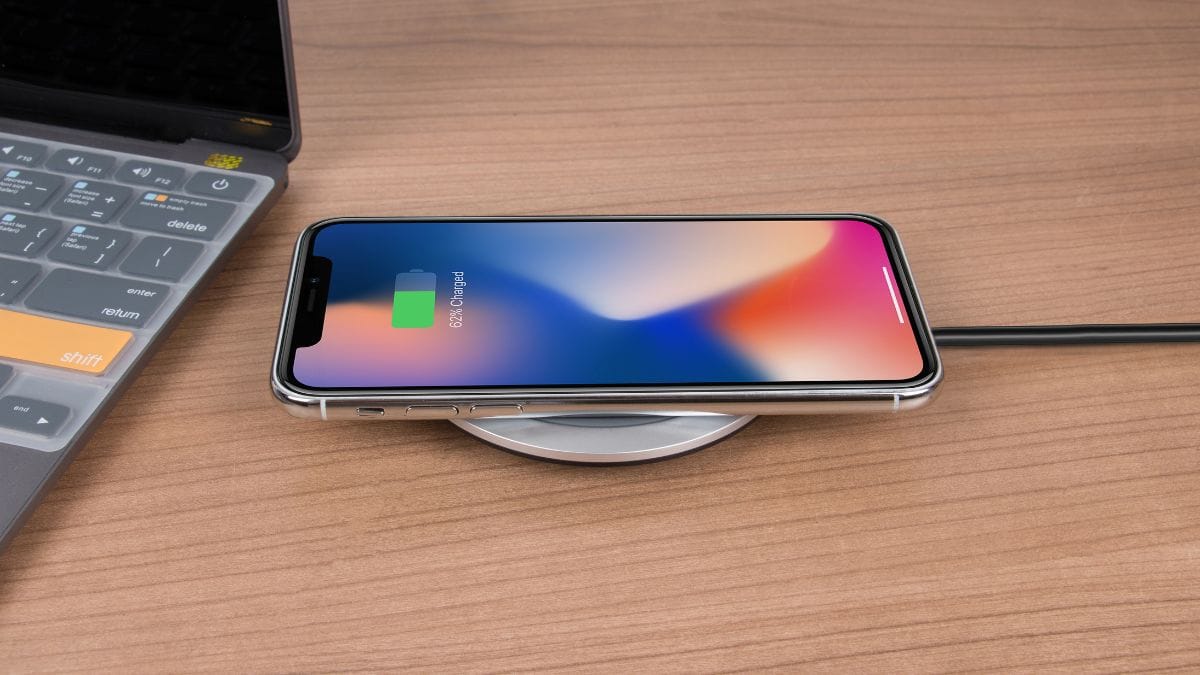
Qi2 magnetic wireless charging is a newer wireless charging standard designed to make charging smartphones easier, faster, and more convenient. It uses magnetic wireless charging to align a compatible phone with a charging pad, helping maintain an efficient connection during charging.
Unlike traditional Qi wireless charging, Qi2 introduces magnetic alignment inspired by Apple’s MagSafe technology, reducing placement issues and improving everyday usability. With support for compatible devices and chargers, Qi2 charging technology can deliver charging speeds of up to 15 watts under the original Qi2 standard. Similar innovations in battery-free devices explore alternative approaches to powering technology. Understanding how magnetic charging works, which devices support it, and how it compares with MagSafe can help you choose the right wireless charger for your smartphone
What Is Qi2 Magnetic Wireless Charging?
I see Qi2 as a wireless charging standard created by the Wireless Power Consortium. Qi2 builds on the Qi standard by adding the Magnetic Power Profile (MPP). MPP uses magnets to line up a phones charging coil with the chargers coil.
I note that traditional Qi wireless charging transfers power without a cable. The phone still has to sit in the spot on the charging pad. If the charging coils are not well aligned Qi charging performance can suffer.
I appreciate that Qi2 solves this alignment problem with a magnetic attachment system. On devices and chargers that’re compatible magnets help the phone snap into the exact charging position.
The main features of Qi2 include:
- alignment: Magnets help position the phone and charger correctly.
- Wireless power transfer: Energy moves between charging coils without a direct electrical connection.
- Standardized compatibility: Certified Qi2 products are designed to work together according to the standard.
- Higher charging power: Original Qi2 can deliver up to 15W while Qi2 25W can deliver up to 25W on compatible devices.
- Magnetic accessories: Qi2 supports accessories such as magnetic charging stands and battery packs.
I feel Qi2 is not another name for any magnetic wireless charger. A product must meet the certification requirements in order to use the Qi2 branding.
How Does Qi2 Magnetic Wireless Charging Work?
I see Qi2 as combining two technologies: alignment and electromagnetic induction.
How Magnets Align the Charging Coils
A wireless charger has a transmitting coil and a compatible phone has a receiving coil. For power transfer these coils must be positioned correctly relative to each other.
Qi2s magnetic system helps align the coils when the phone attaches to the charger. This makes it easier to place the phone without repeatedly adjusting its position.
Magnetic alignment is particularly useful with:
- Wireless charging stands that hold a phone upright.
- battery packs that attach to a phones back.
- Car mounts that combine phone mounting with wireless charging.
- Desk chargers that let you attach and remove your phone quickly.
The magnets do not directly charge the battery. Their main role is to help position the device so the charging system can transfer energy effectively.
How Electromagnetic Induction Transfers Power
Wireless charging works through induction. Here is the process in terms. The charger receives power. A wall adapter supplies electricity to the wireless charging pad. Stand.
The transmitter coil creates a changing field. Electronics inside the charger control the current flowing through the coil.
The receiver coil picks up energy. The magnetic field induces a current in the phones receiving coil.
The phones charging circuitry regulates the power. The device. Manages the received energy before delivering it to the battery.
The charging system adjusts operation as needed. Communication between devices helps manage power delivery and charging conditions.
This process does not need the phones charging port to be connected to a cable. The charger still needs a power source through a USB cable and wall adapter.
Correct coil alignment can reduce losses caused by positioning. However charging efficiency and temperature also depend on the phone the charger design, the power adapter and operating conditions.
Qi2 vs. Traditional Qi, vs. Apple MagSafe
Qi2 Qi and Apple MagSafe are related, but they are not interchangeable terms. They differ in their alignment systems, branding, certification and supported charging capabilities.
| Feature | Traditional Qi | Qi2 | Apple MagSafe |
| purpose | Standardized wireless power transfer | Standardized magnetic wireless charging and power transfer | Apples magnetic charging and accessory ecosystem |
| Magnetic alignment | Not required by the original standard | Included in the Magnetic Power Profile | Uses Apples magnetic system |
| Charging power | Depends on the device and Qi profile | Up to 15W for original Qi2; up to 25W for Qi2 25W | Depends on the iPhone, charger generation and adapter |
| Certification | Qi certification | Qi2 certification | Apples own MagSafe certification, where applicable |
| Accessory support | Depends on the device and accessory | Supports compatible magnetic accessories | Supports Apples MagSafe accessory ecosystem |
The table describes the general differences. Actual charging performance and compatibility depend on the products involved.
Qi2 versus Regular Qi Wireless Charging
I notice that the biggest difference is magnetic alignment. A traditional Qi phone can charge on a charging pad without magnets as long as the phone and charger support the same charging requirements.
Qi2 adds a standardized magnetic positioning system to compatible devices and accessories. This makes attaching a phone to a charger convenient and helps keep the charging coils aligned.
However Qi2 does not guarantee that every device will charge faster than every Qi device. Some manufacturers offer wireless charging systems with different power limits. The maximum speed depends on the phone and charger combination.
Qi2 versus Apple MagSafe
Apple contributed technology based on its MagSafe system to the development of Qi2s Magnetic Power Profile. This helped establish a magnetic wireless charging approach that can be used across participating brands.
However Qi2 and MagSafe remain standards and ecosystems. MagSafe is Apples branded technology while Qi2 is managed by the Wireless Power Consortium.
Compatibility is model-specific. A compatible iPhone can work with Qi2 chargers but the charging speed may differ from what the phone achieves with a supported MagSafe charger. Similarly a Qi2 Android phone is not automatically guaranteed to receive every MagSafe feature or charging speed.
Before buying a charger check the phone manufacturers specifications and the chargers supported charging profiles.
Qi2 15W versus Qi2 25W: What Is the Difference?
Charging power is one of the differences between the original Qi2 standard and Qi2 25W.
The original Qi2 generation supports up to 15 watts of wireless charging power. In July 2025 the Wireless Power Consortium introduced Qi2 25W under specification version Qi v2.2.1 increasing the supported power to 25 watts for compatible devices.
| Feature | Original Qi2 | Qi2 25W |
| Maximum supported charging power | Up to 15W | Up to 25W |
| alignment | Yes | Yes |
| Standardization | WPC Qi2 standard | WPC Qi2 25W specification |
| Phone requirement | Compatible Qi2 phone or supported device configuration | Phone must support Qi2 25W |
| Charger requirement | Compatible Qi2 charger | Compatible Qi2 25W charger |
| Actual charging speed | Depends on the setup | Depends on the complete setup |
A 25W charger does not automatically produce a phone charge at 25W. If the phone supports only original Qi2 at up to 15W it cannot obtain advantage of the newer standards full 25W capability.
Actual charging power can also change as the battery fills or the device heats up. The phone and charger manage power delivery according to their supported capabilities and operating conditions.
For the specification history witness the Wireless Power Consortiums Qi wireless charging overview.
Which Phones and Accessories Support Qi2?
Qi2 support depends on the phone model, its wireless charging hardware and the accessories used with it. Do not assume that every phone with wireless charging or a magnetic case supports the Qi2 standard.
Qi2- Compatible iPhones and Android Phones
recent smartphones support wireless charging but support for Qi2 and Qi2 25W varies by model.
For example Googles Pixel 10 series introduced Qi2 support with the Pixel 10 Pro XL supporting the higher- power Qi2 25W standard. Other models and manufacturers may support charging profiles or use a Qi2 Ready accessory approach.
Before purchasing a charger check:
- The phone manufacturers official specifications.
- Whether the phone supports Qi2, Qi2 25W or only an older Qi profile.
- Whether a particular magnetic case is required.
- Whether the charger is certified for the intended standard.
A phone that supports Qi wireless charging is not automatically a native Qi2 device.
Do You Need a Magnetic Case for Qi2?
Not always. A phone with built-, in Qi2 support can align with a compatible Qi2 charger without requiring a separate magnetic case.
Some phones apply a Qi2 approach, where a compatible phone and a specifically designed accessory or case provide the intended magnetic charging experience. In those cases the case can be a part of the setup.
A generic case that holds a ring does not automatically make a phone Qi2 certified. The phone, the case and the charger all need to support the setup.
If you are not sure look at the manufacturers compatibility details. Search the Wireless Power Consortium certified products database.
Benefits and Limits of Qi2 Magnetic Charging
Qi2 can make wireless charging better. It does not get rid of every drawback of charging a phone without a cable.
Main Benefits
- Easier placement: The magnetic attachment helps a phone snap into the charging spot.
- Consistent alignment: The coils are more likely to stay in the right spot while charging.
- Accessories: Magnetic battery packs, stands and car mounts that match can attach straight to a Qi2 phone.
- Standardized compatibility: Certified Qi2 products follow a shared standard, not a brand‑specific one.
- Supported charging power: Qi2 25W can deliver more power than the original Qi2.
Limitations to Know
- Not every phone supports Qi2. Some phones work with traditional Qi charging.
- Charging speed varies: The highest advertised wattage is not always the speed you get during a charging session.
- Accessories must match: A magnetic attachment by itself does not guarantee a phone is Qi2 certified or that charging works fully.
- Heat can still happen: Wireless charging makes heat and how much depends on the charging setup.
- Older accessories may act differently: An old charger and a new phone might not always work together.
Qi2 is most helpful when a phone, charger and accessories are built to work. If you already have a charging set that fits your needs upgrading may give you convenience of a big boost in every case.
Does Qi2 Charge Faster. Make Less Heat?
Qi2 can make charging steadier by aligning the phone and charger coils. Better alignment can cut losses that happen when coils misalign and those losses can turn into heat.
Still Qi2 does not promise that every charging session will be quicker or cooler than Qi charging.
Many factors affect performance.
- Phone compatibility: The device decides which charging profiles and top power levels it can use.
- Charger capability: A 25W charger cannot make an incompatible phone take 25W.
- Power adapter: The adapter and cable that give power to the charger must meet the charger’s needs.
- Temperature: A phone may lower charging power if it gets hot.
- Battery level: Charging power can drop when the battery gets near full.
- Physical setup: The thickness of a case the design of accessories and how the device is placed can change performance.
Heat is normal when wireless power is shared. The key point is that magnetic alignment can lower some inefficiencies. It does not stop heat or promise a longer battery life.
For battery care use trusted gear follow the phone maker’s charging tips and keep the device away from too much heat.
How to Check If a Qi2 Charger Is Certified
Before buying a Qi2 charger make sure the exact product is certified of just trusting a store description.
Follow these steps:
- Find the charger’s manufacturer and exact model number.
- Look at the packaging and product documents for the Qi2 or Qi2 25W label.
- Go to the Wireless Power Consortium certified products database.
- Search, for the product. Make sure the listed model is the one you plan to buy.
- Check the charger’s supported power output and the phone maker’s compatibility needs.
- Verify the suggested power adapter and cable especially if you want a higher‑power charging mode.
Certification shows that a product has passed the tests. It does not mean every phone will charge at the speed or that all accessories will work the same.
For the results check the phone and charger on their own before buying a full set.
FAQs
What is Qi2 magnetic wireless charging?
Qi2 is a wireless charging standard that uses magnets to align a phone with a compatible charger for convenient, efficient power transfer.
Is Qi2 wireless charging better than regular Qi charging?
Qi2 offers magnetic alignment and up to 15W or 25W charging, depending on the generation and device, while regular Qi performance varies.
Which is better, Qi or MagSafe?
Qi offers broad compatibility, while MagSafe provides magnetic attachment and Apple-focused features. The better choice depends on your device and charging needs.
What is the difference between Qi2 and Qi2 2 wireless charging?
There is no official standard called “Qi2 2.” You may mean Qi2 25W, which supports up to 25W compared with the original Qi2’s 15W.
Are MagSafe and Qi2 the same?
No. They are related magnetic charging technologies, but MagSafe is Apple’s ecosystem, while Qi2 is an industry standard developed by the Wireless Power Consortium.
Key Takings:
- Qi2 magnetic wireless charging combines magnetic alignment with electromagnetic induction to make wireless charging more convenient and consistent. The magnets help position the phone, while the charging coils transfer energy without a direct cable connection to the device.
- The main distinction to remember is that original Qi2 supports up to 15W, while Qi2 25W supports up to 25W on compatible hardware. Neither maximum is guaranteed for every charging session, and device compatibility remains important.
- If you are considering an upgrade, start by checking your phone’s supported charging standard and verifying the charger through the Wireless Power Consortium. That will help you choose a setup that delivers the charging speed, compatibility, and convenience you actually need.
Additional Resources:
- Qi2 25W charging specification: Official announcement explaining the Qi2 25W charging standard.