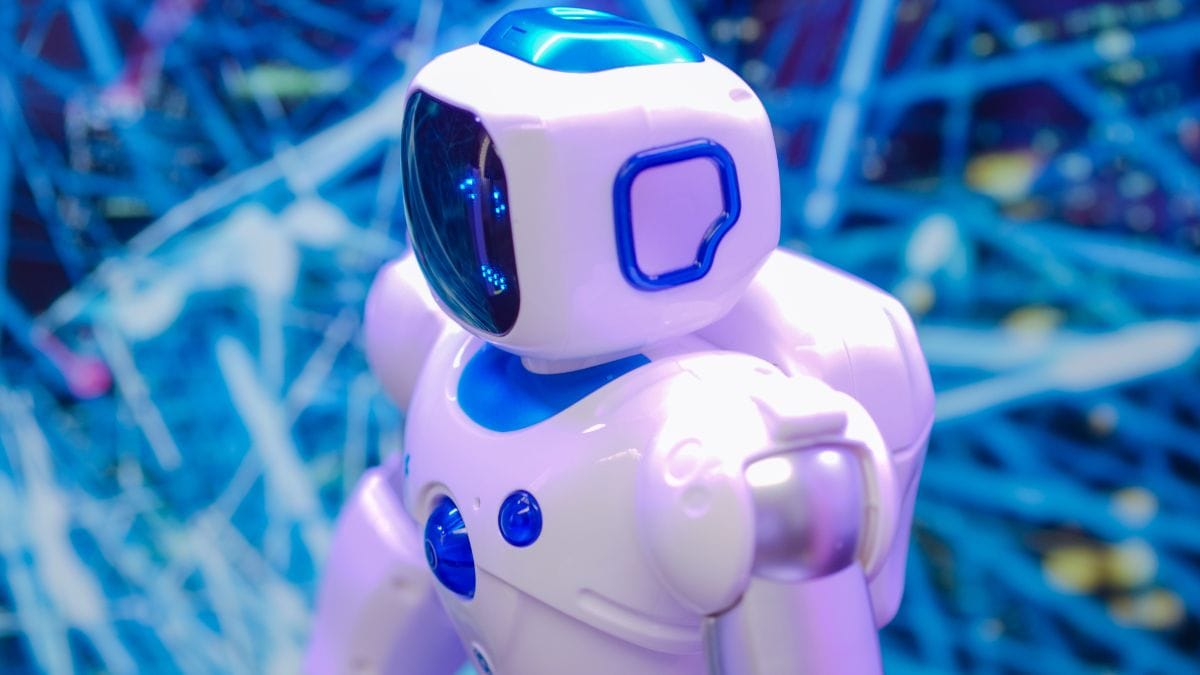
Learn how do robots recognize objects using AI, cameras, computer vision, and sensors to identify items, estimate positions, and interact with the world.
Robots recognize objects by using cameras, sensors, and artificial intelligence to understand what is happening around them. Through robot vision, machines can identify everyday items, detect shapes, estimate distances, and distinguish one object from another. This process often relies on computer vision, a technology that helps robots interpret images and video. Understanding What Makes a Robot helps explain how these systems combine hardware and software to perform tasks. With machine learning and deep learning, robots can learn patterns from large datasets and recognize objects in different environments.
Some systems also use image recognition to identify familiar items, even when lighting or viewing angles change. Understanding how robots recognize objects explains how modern robots navigate spaces, handle tools, assist humans, and perform tasks with greater accuracy
What Is Object Recognition in Robotics?
Object recognition in robotics is the method of using sensor data and computer techniques to locate items within a space. It allows robots to interpret what they see and link it to categories, characteristics or specific items.
For example when a robot scans a table its vision system may find a cup, a plate, a spoon and a phone..
Object recognition collaborates with three tasks:
- Object detection which finds items in an image and estimates their positions.
- Object classification which assigns an item or image region to a group such as cup, bottle or chair.
- Object localization which predicts where an item lies in an image or in the world.
These tasks frequently work together. They are distinct. A robot might detect a bottle. Identify it as a bottle but it may not know the bottles precise three‑dimensional location or how to grasp it safely..
How Do Robots Recognize Objects Step by Step?
A robots object recognition process generally follows a sequence of steps. The exact order varies with the robots sensors, software, environment and task.
Step 1: Capture Images Using Cameras and Sensors
The process begins when a camera records a picture of the robots surroundings..
Robots may employ sensors based on what they need to detect.
- RGB cameras: Capture color images that reveal features such as shape, color and texture.
- Depth cameras: Provide data on how far surfacesre from the sensor.
- Stereo cameras: Use images from two viewpoints to estimate distance.
- LiDAR sensors: Measure distance with laser light and can help create three‑dimensional maps of an area.
- Tactile and force sensors: Deliver data through touch, such as pressure and force.
Not every robot uses all of these sensors. A robot that sorts items may rely on cameras while a robot that selects items from a bin might use depth sensing.
Step 2: Process Images. Find Visual Features
Pictures from a camera consist of pixels not clear descriptions of items. The robots software processes the data to uncover patterns that aid in distinguishing one object from another.
Depending on the system this processing may involve detecting: edges and borders, shapes and curves, colors and textures surface patterns and relationships between image parts. Traditional computer vision systems use crafted features and mathematical rules while newer AI systems learn visual features from training data.
For example a system trained to locate household items may learn patterns for cups, bowls, bottles and other common objects.
Step 3: Find and Name Objects Using AI
Many robots use machine learning models to locate items. During training these models learn from examples. When the robot receives an image the model analyzes it. Predicts which items are present.
A vision model might identify a region of an image as a cup with a confidence level. Another model might detect items. Indicate their positions within the image.
The two main tasks often work together:
- Object detection which shows where objects are and
Some systems use learning and neural networks for these tasks. Others combine learned models, with computer vision, geometric data or task‑specific rules. The models predictions are not always correct. Unusual angles, poor lighting or new items can cause mistakes.
Step 4: Guess Object Position and Direction
Locating an item is part of the task. A robot that must pick up a cup must also know the cups position and orientation. This is where depth sensing and three‑dimensional perception become essential.
A robot must know where an object is in three‑dimensional space. A robot also needs to know how an object is turned or rotated how big an object is and where a good place to grab an object is. For example a picture might show a cup near the side of a table. Depth data and camera settings can help a robot guess where the cup is in space to its camera or arm.
Some systems use localization and mapping (SLAM) to help a moving robot know where it is while the robot builds a map of the area.
MIT researchers have studied how a robot’s three‑dimensional map can help a robot tell apart objects that might seem connected in one picture. See MIT’s research on object recognition for robots.
Step 5: Use the findings to plan an action.
Once a robot knows what an object is and where an object is, a robot’s control system can use that information to choose an action.
I see a robot may: Move toward an object. Reach for an object with an arm. Choose where to grab an object. Pick an object up. Move an object. Avoid something in the way. Put an object in a container. The sensing system and the movement system must work together. A robot may know a cup is there but still fail to grab the cup if a robot guesses the spot wrong picks a grip that does not work or meets something
What Technologies Help Robots Find Objects?
Several technologies help a robot with object recognition. Each technology gives a robot information or processing ability.
Computer. Image processing.
Computer vision lets a robot look at pictures. Get information about objects and scenes. In robotics a robot uses computer vision to find patterns, separate objects from backgrounds, track movement and guess positions.
Image processing prepares data while computer vision methods read that data to solve tasks. I realize the two areas are not the same.
For example making an image brighter is an image‑processing step. Finding a bottle in that image is a computer‑vision task.
Artificial intelligence and machine learning.
Machine learning is one way to build these models.
A typical training process goes like this: A model receives training examples such as pictures of object types. During training a model learns patterns that help a robot tell those types. After training the model looks at pictures. Makes guesses that a robot can use for a task. I note the variety of training data matters. A model trained on pictures of clean objects may not work as well when objects are broken, half‑hidden or under different lighting.
Some newer ideas use vision‑language models trained on pictures and text. These models can help a robot find objects that are described in words although real‑world seeing and moving remain hard.
Cameras, depth. Lidar.
Different sensors have strengths and limits.
| Technology | What it provides | Limitation |
| RGB camera | Color, texture and visual details | Depth may be unclear from one image |
| Stereo camera | Depth estimates from two views. | Performance depends on picture quality and scene details |
| Depth camera | Distance measurements for surfaces | Some materials and conditions can affect measurements |
| LiDAR | Distance measurements and 3D data. | Fine details and object types may need sensors |
| Tactile or force sensor | Information from touching. | Usually needs to touch the object |
Sensor fusion and tactile sensing.
Sensor fusion combines data from sensors to give a robot a guess of the area.
I think a robot might use a camera to find a package and a depth sensor to guess its position. While picking up force or touch feedback could help a robot know when it has the package.
I realize touch gives a robot information that vision cannot easily find, like how resistant an object’s how much force is needed to lift it.
I read that MIT News wrote about research where robots guessed traits such as an object’s weight and softness by handling the object and using sensors. This shows how robot perception can go beyond just seeing. Check out the MIT research report.
How Do Robots Find Objects in Life?
Finding objects in a lab is different, from finding them in a warehouse, a home or outside. Things might be stacked on top of each other. Lighting might change. New things might not look like what the model was trained on.
Finding Objects From Angles
A mug seen from the front might show the handle while a top view might show mostly the opening.
Research from MIT showed that using data from views helped a robot vision system find objects that were hard to tell apart from a single angle. MITs research, on home robot vision is an example.
Identifying Objects in Cluttered or Hidden Scenes
I often see that objects are not fully visible because other items block them. A robot in a warehouse might have to find a package that’s inside a bin. A robot at home might have to spot a toy that’s under a pile of other toys. There are ways to help the robot see these hidden objects. One way is object segmentation, which means the robot separates the pixels of the object from the background or from neighboring objects. Another way is three‑dimensional mapping, which gives the robot extra depth data so it can tell when objects overlap in a picture. A third way is to use viewpoints: the robot or its camera can move to get a clearer view. A fourth way is sensor fusion, where the robot mixes data from the camera with data from sensors.
For instance MIT researchers made a system called RF‑Grasp. RF‑Grasp uses radio‑frequency identification tags with a normal camera. This lets the robot find and pick up a tagged object even if the camera cannot see it. RF‑Grasp needs tags and equipment so not every robot can do this. You can read more about RF‑Grasp on the MIT News site.
Recognizing Unfamiliar or Similar Looking Objects
A robot can run into an object that it never saw before when it was learning. It might also have to tell the difference between two bottles that look the same or pick out one book from a stack. Traditional closed‑set recognition systems only know a fixed list of categories. If the robot sees an object the system will often put it into a known category by mistake. Newer methods that combine vision with language try to let the robot recognize more objects and read descriptions. Still getting the robot to find an object reliably is hard especially when the object is partly hidden or the robot has to handle it. In 2024 MIT released a system called Clio, a task‑oriented perception platform. Clio shows how a robot can look at a scene and decide what to do. This example shows that useful recognition needs both information and a clear task.
Dealing With Poor Lighting and Transparent Objects
Lighting makes a difference to the camera. If the room is too dark if there are shadows or bright spots that glare the camera may not see the right colors or edges. Transparent objects are even trickier. Light can go through a glass bottle or bounce off a shiny surface so the camera may not know where the glass is. A clear glass can look like the background and a depth sensor may have trouble measuring its surface. Robots can try using viewpoints, special sensors or extra processing to solve these problems. No single trick works all the time. NIST studies how lighting how shiny a surface is, the shape of the object and odd materials affect how depth sensors work. These studies help us know when a robot will struggle to see and pick up objects.
How Does a Robot Pick Up a Cup?
I like to imagine a robot that wants to grab a cup from a kitchen table. The robot must do things that work together from looking at the cup to moving its arm. Here are the steps:
- Capture the scene. The robots camera takes a picture that shows the cup, the table and nearby items.
- Detect the cup. A computer‑vision model looks at the picture. Marks a region that might contain a cup.
- Classify the object. The model says that the marked region is a cup, based on the patterns it learned.
- Estimate its position. The robot uses depth data, the camera’s calibration and simple math to find where the cup is relative to the robot.
- Choose a grasp. The robot decides how to approach the cup and where to place its fingers taking the cup’s shape its orientation and any obstacles into account.
- Move toward the cup. The robot’s controller makes the arm move along the path.
- Check the result. The robot may feel the cup with force sensors look again with a camera or use feedback to see if the cup was successfully grabbed.
This example shows that seeing the cup is part of the job. The robot also needs to know where the cup is plan a path control its arm and check that it actually held the cup. If the cup is only partly visible the robot might have to move its camera. If its estimate of the cup’s location is wrong the arm might miss the cup even though the robot recognized it correctly.
FAQs
Can a robot be self-aware?
No, current robots are not known to have genuine self-awareness. They can monitor their own systems and respond to information about themselves.
How does AI recognize objects?
AI analyzes images or sensor data to identify objects by their features, shapes, colors, and patterns.
Does a robot feel pain?
No, robots do not experience pain like humans or animals. Sensors can detect damage or pressure, but that does not mean they feel pain.
How do robots see and hear things?
Robots use cameras to see and microphones to detect sound. AI processes this data to recognize objects, voices, and environmental signals.
Does a robot feel pain?
No, robots do not have biological nerves or feelings like humans. They can detect damage using sensors without experiencing pain.
Key Takings:
- Robots are not known to have genuine self-awareness like humans.
- AI recognizes objects by analyzing images, shapes, colors, and patterns.
- Robots do not feel pain, but sensors can detect pressure or damage.
- Cameras help robots see, while microphones allow them to detect sounds.
- AI processes sensory data to help robots understand and respond to their surroundings.
Additional Resources:
- Robotic perception systems and sensor data processing: Explains how robots use sensors and algorithms to interpret their surroundings.