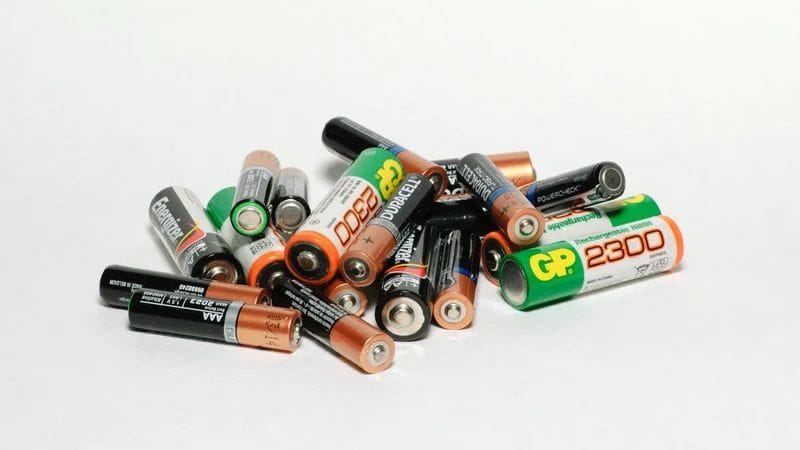
Explore next-generation batteries, from solid-state and sodium-ion to lithium-sulfur and flow batteries, and their future applications.
Batteries are becoming increasingly important in electric vehicles, consumer electronics, renewable energy, and grid storage. While lithium-ion batteries remain widely used, researchers are developing next generation battery technologies to address challenges such as energy density, charging speed, safety, cost, and material availability. These emerging systems include solid-state batteries, sodium-ion batteries, lithium-sulfur, flow batteries, and other advanced energy storage solutions.
Some aim to store more energy in less space, while others focus on longer service life, improved safety, or reduced dependence on critical materials. As battery research continues, future battery technology could play an important role in transportation, clean energy, robotics, and large-scale electricity storage.
What Are Next-Generation Batteries?
Next-generation batteries are advanced energy-storage technologies being developed to improve on some of the limitations of conventional lithium-ion batteries.
Depending on the chemistry, researchers may be targeting:
- Higher energy density
- Longer operating life
- Faster charging
- Better safety
- Lower manufacturing costs
- Greater resistance to extreme temperatures
- Reduced dependence on critical materials
- Better suitability for long-duration energy storage
Some technologies change the electrolyte, while others use different electrode materials or entirely different electrochemical systems.
For example, a solid-state battery replaces the conventional liquid electrolyte with a solid electrolyte. A sodium-ion battery replaces lithium ions with sodium ions as the charge carriers. Lithium-sulfur batteries use sulfur-based cathode chemistry instead of the conventional lithium-ion cathode systems.
Why Are Researchers Looking Beyond Lithium-Ion?
Lithium-ion technology has improved considerably, but it still involves trade-offs.
Battery manufacturers warrant to balance energy density, cost, safety, charging performance, cycle life, raw materials, and manufacturing complexity.
The requirements also vary by application. An electric vehicle needs a compact battery with high energy density, while a grid-storage system may place greater value on cost, longevity, and scalability.
That is why the future of batteries is likely to involve multiple technologies rather than one universal replacement for lithium-ion.
7 Next Generation Battery Technologies
1. Solid-State Batteries
Solid-state batteries are among the most closely watched next-generation battery technologies.
Instead of using a liquid electrolyte containing organic solvents, an all-solid-state battery uses a solid electrolyte. This different architecture could enable new combinations of electrode materials and potentially improve safety and energy density.
However, a solid state does not automatically mean that a battery is already safer, cheaper, or better in every respect. The IEA notes that the advantages often associated with all-solid-state batteries have not yet been fully demonstrated in real-world applications at scale.
Manufacturing is another challenge. All-solid-state cells can require more complex production processes and stricter mechanical requirements, including pressure management during operation.
Current development includes semisolid and hybrid designs as well as all-solid-state systems. The technology is therefore better understood as a family of battery architectures rather than a single product.
Potential advantages:
- Potentially higher energy density
- Reduced reliance on flammable liquid electrolyte
- Potential safety improvements
- Potential compatibility with lithium-metal anodes
Major challenges:
- Manufacturing cost
- Solid electrolyte performance
- Electrode-electrolyte interfaces
- Mechanical stability
- Scaling production
The IEA expects all-solid-state batteries to remain concentrated initially in premium applications while manufacturers work through scale-up challenges.
2. Sodium-Ion Batteries
Sodium-ion batteries are another important development because they replace lithium ions with sodium ions.
Sodium is widely available, making the chemistry attractive from a resource and supply chain perspective. Sodium-ion batteries can also perform well at low temperatures.
The technology is moving from research toward commercial deployment. The IEA reports that the first sodium-ion battery-powered electric car was introduced in China in late 2023, while major manufacturers are now scaling production.
However, sodium-ion batteries currently have lower energy density than leading lithium-ion chemistries.
The IEA reports that the latest sodium-ion cells can reach up to about 175 Wh/kg, compared with up to approximately 205 Wh/kg for LFP and 265 Wh/kg for NMC batteries.
That difference matters in applications such as long- range electric vehicles, where battery weight and volume directly affect vehicle design.
Research is also focused on improving sodium-ion anodes. A 2026 Nature Reviews Materials review identifies hard carbon as a key limitation and discusses strategies for improving sodium-ion energy density and cost.
Potential applications include:
- Smaller EVs
- Urban vehicles
- Two- and three-wheelers
- Industrial equipment
- Stationary energy storage
Sodium-ion batteries may therefore compete with lithium-ion in particular applications rather than replacing it everywhere.
3. Lithium-Sulfur Batteries
Lithium-sulfur batteries use sulfur as a major cathode material and are attractive because sulfur is relatively abundant and the chemistry has very high theoretical energy-density potential.
A 2026 review in Nature Reviews Clean Technology cites a theoretical energy density of around 2, 500 Wh/ kg for lithium sulfur chemistry. That figure is a theoretical value, not the performance of a commercially available battery.
This distinction is important.
A technology can have an impressive theoretical energy density while still struggling to achieve comparable performance in a practical cell.
One major problem with lithium sulfur batteries is the behavior of sulfur and soluble intermediate compounds during cycling. These processes can contribute to capacity loss and poor long-term cycling stability.
Researchers are working on ways to control these reactions and improve durability.
Why lithium-sulfur is interesting:
- Very high theoretical energy density
- Sulfur is widely available
- Potentially lower material costs
- Potential applications where weight is extremely important
Main challenges:
- Cycle life
- Sulfur reaction behavior
- Electrode stability
- Practical energy density
- Manufacturing scale-up
This makes lithium-sulfur particularly interesting for applications where energy-to-weight performance is more important than simply achieving the lowest battery cost.
4. Flow Batteries
Flow batteries acquire a very different approach from the compact batteries found in smartphones and EVs.
Instead of storing all of the active materials inside a conventional solid electrode structure, flow batteries use liquid electrolytes that are stored in tanks and circulated through an electrochemical cell.
The U.S. Department of Energy identifies flow batteries as one of the important next-generation battery technologies being developed for energy storage.
Their architecture makes them particularly interesting for stationary applications.
For grid renewable energy, it can be designed around the required combination of power and energy capacity. Increasing the amount of electrolyte can increase storage capacity without simply scaling the entire power-conversion system in the same way as a conventional battery pack.
Potential applications:
- Renewable- energy storage
- Utility-scale storage
- Long-duration energy storage
- Commercial and industrial systems
Flow batteries are not designed to replace the compact battery in your phone or necessarily power a long-range EV. Their value comes from solving a different energy-storage problem.
5. Lithium-Air and Other Metal-Air Batteries
Metal-air batteries use oxygen from the surrounding environment as part of their electrochemical system.
Lithium-air batteries have attracted research interest because of their potentially very high theoretical energy density.
But high theoretical performance does not automatically translate into a practical battery.
Researchers still face significant challenges involving reaction chemistry, electrode stability, electrolyte behavior, efficiency, and cycle life.
As a result, metal-air technologies remain much more research-oriented than established lithium-ion batteries.
They illustrate an important point about next-generation battery research: the most impressive theoretical chemistry is not necessarily the technology closest to commercialization.
6. Zinc-, Magnesium-, and Other Multivalent-Ion Batteries
Researchers are also exploring batteries based on ions such as zinc and magnesium.
These systems are attractive because alternative charge carriers could potentially address some of the resource, cost, safety, or performance issues associated with conventional lithium-ion chemistry.
However, changing the charge carrier introduces new technical problems.
The ion must migrate efficiently through the electrolyte and electrodes, while the electrode materials must remain stable during repeated charging and discharging.
Researchers are therefore investigating:
- Zinc-ion batteries
- Magnesium-ion batteries
- Aluminum-ion batteries
- Potassium-ion batteries
- Other multivalent-ion systems
These technologies are important areas of battery research, but their development stages vary considerably.
7. Molten-Salt Batteries
Molten-salt electrochemistry is another emerging direction in next-generation batteries.
A 2026 review in Nature Reviews Chemistry describes inorganic molten salts as a developing family of battery electrolytes. These materials can offer low flammability, high thermal stability, and potentially low material costs, while enabling electrochemical operation across wider temperature ranges.
Researchers are investigating different molten-salt battery architectures, including systems involving membranes and membrane-free designs.
The technology is still an emerging research area, so it should not be confused with a commercially mature replacement for lithium-ion batteries.
Its importance is that it opens another pathway for designing batteries around different electrolyte properties and operating conditions.
Next-Generation Batteries vs. Lithium-Ion
There is no simple answer to whether a next-generation battery is “better” than lithium-ion.
Performance depends on what the battery is supposed to do.
| Technology | Main Potential Advantage | Major Challenge | Potential Applications |
| Lithium-ion | Mature, high performance | Material and safety constraints | EVs, electronics, storage |
| Solid-state | Potential energy density and safety benefits | Manufacturing and interfaces | EVs, premium applications |
| Sodium ion | Resource availability and low-temperature performance | Lower energy density | EVs, storage, industrial equipment |
| Lithium-sulfur | Very high theoretical energy density | Cycle life and practical performance | High-energy applications |
| Flow | Scalable stationary storage architecture | Lower energy density | Grid and renewable storage |
| Metal-air | Extremely high theoretical potential | Complex chemistry and durability | Long-term research |
| Molten salt | Thermal stability and alternative electrolyte chemistry | Emerging technology and system complexity | Advanced energy storage |
The table should not be interpreted as a ranking. Each technology is being developed around different technical requirements.
For example, the IEA says sodium ions’ lower energy density limits their competitiveness with some lithium-ion systems today, but their low-temperature behavior and resource characteristics could generate it useful in specific applications.
Energy Density, Safety, Cost, and Cycle Life
Four measurements are especially important when comparing battery technologies.
Energy Density
Energy density describes how much energy a battery can store relative to its weight or volume.
Higher energy density is particularly valuable in:
- Electric vehicles
- Drones
- Aircraft
- Portable electronics
- Robotics
But a high energy-density number alone does not determine whether a battery is commercially useful.
The number could describe a theoretical material, laboratory cell, or complete battery system. Those are very different measurements.
Safety
Battery safety depends on chemistry, materials, design, manufacturing quality, thermal management, and operating conditions.
Solid electrolytes may reduce some risks associated with flammable liquid electrolytes, but solid- state batteries still have engineering challenges that must be solved before their potential benefits can be fully realized at scale.
Cost
Cost is not determined simply by the price of one raw material.
A battery’s total cost also depends on:
- Manufacturing equipment
- Production yield
- Processing requirements
- Material purity
- Supply chains
- Cell design
- Pack integration
- Recycling
This is why a battery using an inexpensive material is not automatically cheaper to manufacture.
Cycle Life
Cycle life describes how well a battery maintains its performance through repeated charging and discharging.
A battery intended for daily EV use may warrant a very different durability profile from a battery designed for occasional grid storage.
Where Will Next-Generation Batteries Be Used?
Electric Vehicles
EVs are one of the biggest drivers of advanced battery development.
Solid-state batteries are being pursued partly because of their potential for higher energy density, while sodium-ion batteries could be useful in vehicles where lower energy density is acceptable.
The IEA expects sodium- ion technology to be particularly relevant to smaller-range vehicles and certain commercial applications, while solid-state systems are initially more likely to appear in premium segments.
Grid Energy Storage
Grid storage has different requirements from EVs.
A stationary battery does not need to be lightweight. Cost, durability, safety, and long-duration operation can be more important.
That creates opportunities for flow batteries and other technologies designed specifically for stationary storage.
Renewable Energy
Solar and wind generation can vary depending on weather and time of day.
Energy-storage technologies can help shift electricity availability from periods of high production to periods when demand is higher.
Different battery chemistries can therefore serve different roles in renewable-energy systems.
Consumer Electronics
Phones, laptops, tablets, and other portable electronics benefit from batteries that combine:
- High energy density
- Small size
- Low weight
- Long cycle life
- Safety
- Fast charging
Solid-state and advanced lithium-based designs are being investigated for these kinds of requirements, although commercial adoption depends heavily on manufacturing economics.
Robotics and Advanced Machines
Battery performance is increasingly important for robots and other mobile machines.
The IEA notes that emerging markets such as humanoid robotics could develop an early source of demand for solid-state batteries.
For robots, battery weight affects how much useful equipment the machine can carry and how long it can operate between charges.
What Is Holding Next-Generation Batteries Back?
Developing a working laboratory cell is only one step toward creating a commercially successful battery.
Manufacturing and Scale-Up
A battery chemistry must be manufactured consistently across thousands or millions of cells.
Manufacturers have to solve problems involving:
- Production yield
- Material consistency
- Electrode manufacturing
- Cell assembly
- Quality control
- Thermal management
- Pack integration
Solid-state batteries are a good example. The IEA reports that their manufacturing remains more complex and costly than lithium-ion production, with additional mechanical requirements.
Supply Chains
New batteries can create new supply chain requirements.
For sodium-ion batteries, for example, hard carbon is an important anode material. The IEA notes that the supply chain for hard carbon remains relatively underdeveloped and concentrated geographically.
So replacing lithium with another element does not automatically eliminate supply chain challenges.
Battery Degradation
A battery must maintain useful performance after many charge-discharge cycles.
Emerging chemistries can face degradation mechanisms that differ from conventional lithium-ion batteries.
For lithium-sulfur systems, for example, sulfur reactions and soluble intermediates create important cycling challenges.
Recycling
Recycling will emerge increasingly important as battery deployment grows.
The best recycling strategy may differ depending on the chemistry and materials used. This means future battery systems will need to consider recycling and material recovery alongside cell performance.
What Is the Future of Battery Technology?
The future is unlikely to consist of one battery chemistry replacing everything else.
Instead, battery development is moving toward application-specific technologies.
A long-range EV may prioritize energy density. A city vehicle may accept a lower energy density in exchange for lower cost or better cold-weather performance. A grid-storage system may prioritize long service life and scalable energy capacity.
Research is also moving beyond simply increasing battery capacity.
A September 2026 review in Nature Reviews Materials describes a broader shift toward smart battery systems capable of sensing internal states, managing degradation, and adapting their operation. The research covers applications including EVs, aviation, and grid-scale energy storage.
This suggests that the next generation of batteries may be defined not only by new chemistry but also by better materials, sensors, control systems, manufacturing, and battery-management technology.
Will Next-Generation Batteries Replace Lithium-Ion?
Not immediately, and probably not everywhere.
Lithium-ion batteries have an enormous existing manufacturing ecosystem and continue to improve.
At the same time, next-generation batteries can address specific limitations.
Sodium-ion may evolve useful where cost, resource availability, or cold-temperature performance matters more than maximum energy density. Solid-state batteries could target applications where higher performance justifies more complex manufacturing. Flow batteries can address long-duration stationary storage, while lithium-sulfur and other advanced chemistries remain areas of intensive research.
The more realistic future is therefore a diverse battery ecosystem, with lithium-ion continuing to serve major markets while newer technologies expand into applications where their particular advantages establish sense.
FAQs
New battery technology in 2026
New battery technologies in 2026 include solid-state, sodium-ion, lithium-sulfur, and other advanced chemistries designed to improve energy density, safety, cost, and charging.
Solid-state battery
A solid-state battery uses a solid electrolyte instead of a liquid one, potentially offering better safety, energy density, and durability.
New battery technology to replace lithium in Tesla
Tesla has not confirmed one single technology to replace lithium-ion batteries. Alternatives such as sodium-ion and solid-state batteries are being developed.
Latest battery technology for solar
Lithium iron phosphate (LFP) batteries are widely used for solar energy storage, while sodium-ion and flow batteries are emerging alternatives.
Sodium-ion batteries
Sodium-ion batteries use sodium instead of lithium, offering potentially lower material costs and better resource availability, though generally with lower energy density.
Key Takings:
- Next generation batteries include solid-state, sodium-ion, lithium-sulfur, flow, metal-air, multivalent-ion, and molten-salt technologies.
- These batteries aim to improve energy density, safety, charging speed, cost, durability, and material availability.
- Solid-state batteries could offer higher energy density and improved safety, but manufacturing and scale-up remain challenges.
- Sodium-ion batteries use more widely available materials but currently have lower energy density than leading lithium-ion batteries.
- Lithium-sulfur batteries offer very high theoretical energy density, but cycle life and practical performance remain major challenges.
- Flow batteries are mainly suited to grid and long-duration energy storage rather than portable electronics.
- No single battery technology is expected to replace lithium-ion across every application.
- The future of battery technology will likely involve multiple chemistries designed for different applications.
Additional Resources:
- Next-generation battery technologies: Official U.S. Department of Energy overview of emerging battery technologies, including solid-state, sodium-ion, and flow batteries.